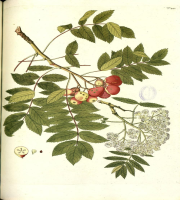
(Sorb tree)
Botanical info:
Sorb tree is a deciduous tree growing to 15–20 m (rarely to 30 m) tall with a trunk up to 1 m diameter, though it can also be a shrub 2–3 m tall on exposed sites. The bark is brown, smooth on young trees, becoming fissured and flaky on old trees. The seeds probably contain hydrogen cyanide. It grows naturally in woods and bushy places. It is native to the Mediterranean Basin. Flowering in early spring.
Hippocratic legacy:
a. In Regimen 2 sorb fruit is described:
a. As statuary and astringent.
Other uses:
The hydrogen cyanide is the ingredient that gives almonds their characteristic flavor. Unless the seed is very bitter it should be perfectly safe in reasonable quantities. In small quantities, hydrogen cyanide has been shown to stimulate respiration and improve digestion, it is also claimed to be of benefit in the treatment of cancer. In excess, however, it can cause respiratory failure and even death. The fruit is usually blatted if it is going to be eaten raw. This involves storing the fruit in a cool dry place until it is almost but not quite going rotten. At this stage the fruit has a delicious taste, somewhat like a luscious tropical fruit. The fruit will often begin its bletting process whilst still on the tree and up to mid-September. The fruit can also be dried and used like prunes.