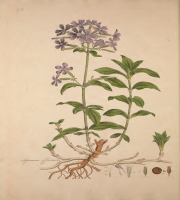
(Soapwort)
Botanical info:
Soapwort possesses leafy, unbranched stems (often tinged with red). It grows in patches, attaining a height of 70 cm. It is native to wet places and woodland margins and clearings of Europe. Flowering from May to September.
Hippocratic legacy:
a. In Nature of Women:
a. Soapwort root is used as a post menstruation and post-birth purgative.
b. Soapwort root and fruit are used for placenta extraction.
b. In Diseases of Women 1:
a. Minced soapwort root with honey as a post menstruation and post-birth purgative.
c. In superfetation:
a. Soapwort fruit is used as uterus cervix softener.
Other uses:
As its common name implies, it can be used as a very gentle soap, usually in dilute solution. It has historically been used to clean delicate or unique textiles, especially woollen fabrics. A decoction cures the itch. Has proved very useful in jaundice and other visceral obstructions. It is a proposed alternative medication for venereal complaints. It is a tonic, diaphoretic and alterative, a valuable remedy for rheumatism or cutaneous troubles resulting from any form of syphilis.