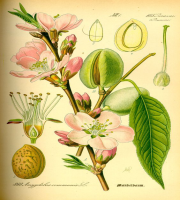
(Almond)
Prunus dulcis (Mill.) D. A. Webb Rosaceae
Botanical info:
Almond is a deciduous tree, growing 4–10 m tall, with a trunk of up to 30 cm thick. The young twigs are green at first, becoming purplish were exposed to sunlight, then grey in their second year. The wild ancestor of the almond is unknown, but it is generally accepted it was originated in the Levante. Flowering in March.
Hippocratic legacy:
a. Regimen 2:
a. Almonds are a heating food.
b. Diseases 2:
a. As an antipyretic.
c. Diseases 3:
a. Almonds are used in an expectorant remedy.
d. Nature of Women:
a. As a remedy for children’s genital ulcers.
e. Diseases of Women 1:
a. The leaves of almond are recommended for uterus pains.
f. Diseases of Women 2:
a. An infusion of almond and sesame is used against leucorrhea.
b. Against women’s hysteria.
Other uses:
Marzipan, a smooth, sweetened almond paste, is used in a number of elegant cakes and desserts. Almond milk, along with almond butter and almond oil, are versatile products used in both sweet and savory dishes. Almond flour or ground almond meal is often used as a gluten-free alternative to wheat flour.