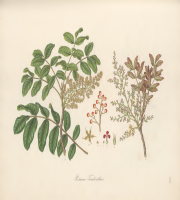
(Terebinth)
Botanical info:
The terebinth is a deciduous small tree or large shrub, growing to 10 m tall. The leaves are compound, and the flowers reddish-purple. The fruit consists of small, globular drupe red to black when ripe. All parts of the plant have a strong resinous smell. It grows near the sea, deep ravines and near salt-lakes and streams in the garrigue, maquis, and in deciduous oak wood. It is native to the Mediterranean basin. Flowering from March to April.
Hippocratic legacy:
a. In Superfetation:
a. Terebinth resin is used in the preparation of a softener and purgative remedy.
b. In Nature of Women:
a. Terebinth resin is described as purgative.
c. In Diseases of Women 1:
a. A drink prepared by terebinth resin mixed with wine and honey is suggested as post birth painkiller.
b. A uterus orifice ointment softener is prepared by mixing terebinth resin with rose myrrh and wheat.
Other uses:
Resin obtained from incisions in the bark is antidote, anti-inflammatory, antiseptic, antispasmodic, aphrodisiac, cytostatic, diuretic, expectorant, febrifuge, laxative, stimulant, and vulnerary. Externally, the resin is used to treat wounds, arthritis, gout, skin conditions including leprosy, scabies and lice, sciatica. It is taken internally in the treatment of asthma and chronic bronchial infections, streptococcal, urinary, and renal infections, hemorrhage, gallstones, tapeworm, and rheumatism. It reduces inflammation and relieves pain. It is used in the treatment of colds and flu, problems in the digestive system. It is also quite beneficial for liver, kidney, heart, and respiratory system disorders. The leaves are astringent, diuretic and hypotensive, and are used in the treatment of diabetes, stomach aches, diarrhea, and jaundice.